24 Hour Service - 7 Days a Week


Picking the right water heater matters for San Diego homeowners. There are a few types of residential water heating systems out there. Mainly, you’ll see tankless and traditional water heaters. Each works differently and affects your home’s efficiency and environment in its own way. Understanding these can help you choose the best fit.
Here’s a quick look at each type:
Things to think about:
Before picking a system, know how your home uses hot water:
Thinking about these helps find a system that fits your lifestyle and budget. Also, local San Diego plumbing experts can guide you through this process and install it right.
So, knowing the basics between tankless and traditional storage tanks puts you ahead as a homeowner in San Diego wanting an efficient system made for your needs.
Traditional water heaters, sometimes called storage tank water heaters or conventional water heaters, are popular in many homes. Unlike tankless water heaters that heat water only when you need it, these keep hot water ready in a big tank. This means you get hot water right away. But there are some good and bad things to know before picking one. That’s why it helps to compare tankless vs traditional water heaters.
Storage tank water heaters work by heating and storing a large amount of hot water all the time. You get instant hot water when you open the tap. Sounds great, right? Well, there are some limits.
One problem is standby energy losses. The heater uses energy to keep the stored water hot even when you don’t need it. This wastes energy and makes home appliance efficiency drop compared to systems that only heat on demand.
Another issue is capacity limits. Once your tank runs out of hot water, you have to wait for it to fill up and heat again before getting more hot showers or washing dishes.
Still, many folks use traditional tanks because they’re simple and cost less upfront.
Storage tanks use more energy than tankless models because they keep heating all day long. The U.S. Department of Energy says about 10–20% of the energy used by these units goes just to keeping the water warm when not in use.
But here’s the thing — the upfront water heater costis usually lower than buying and installing a tankless system. Your utility bills might go up over time because of the constant reheating, but how much depends on how much you use it and what fuel powers it.
If you want to save money later, think about how much you pay at first versus what your monthly bills will be with each option.
A typical traditional storage tank lasts around 8 to 12 years. Tankless models often last longer—sometimes up to 20 years—if you take care of them right.
Keeping your storage tank in good shape means regular maintenance:
Skipping these steps can lead to problems sooner or expensive fixes down the road.
Traditional storage tanks come in two main types: gas-fired water heaters and electric ones.
Gas-fired models heat water faster after use—that’s called a faster recovery rate—which works well if your family needs lots of hot water quickly.
Electric tanks cost less to set up but take longer to reheat cold water, so they might fit smaller homes or places without natural gas better.
Fuel prices also affect how much running these heaters will cost. Talking with pros like Black Mountain Plumbing can help pick what suits your home best.
Picking between traditional vs tankless often depends on your household size, budget, space available, and whether you prefer saving energy or having convenience. Knowing how each system works makes it easier to choose the right one for your home’s hot water needs.
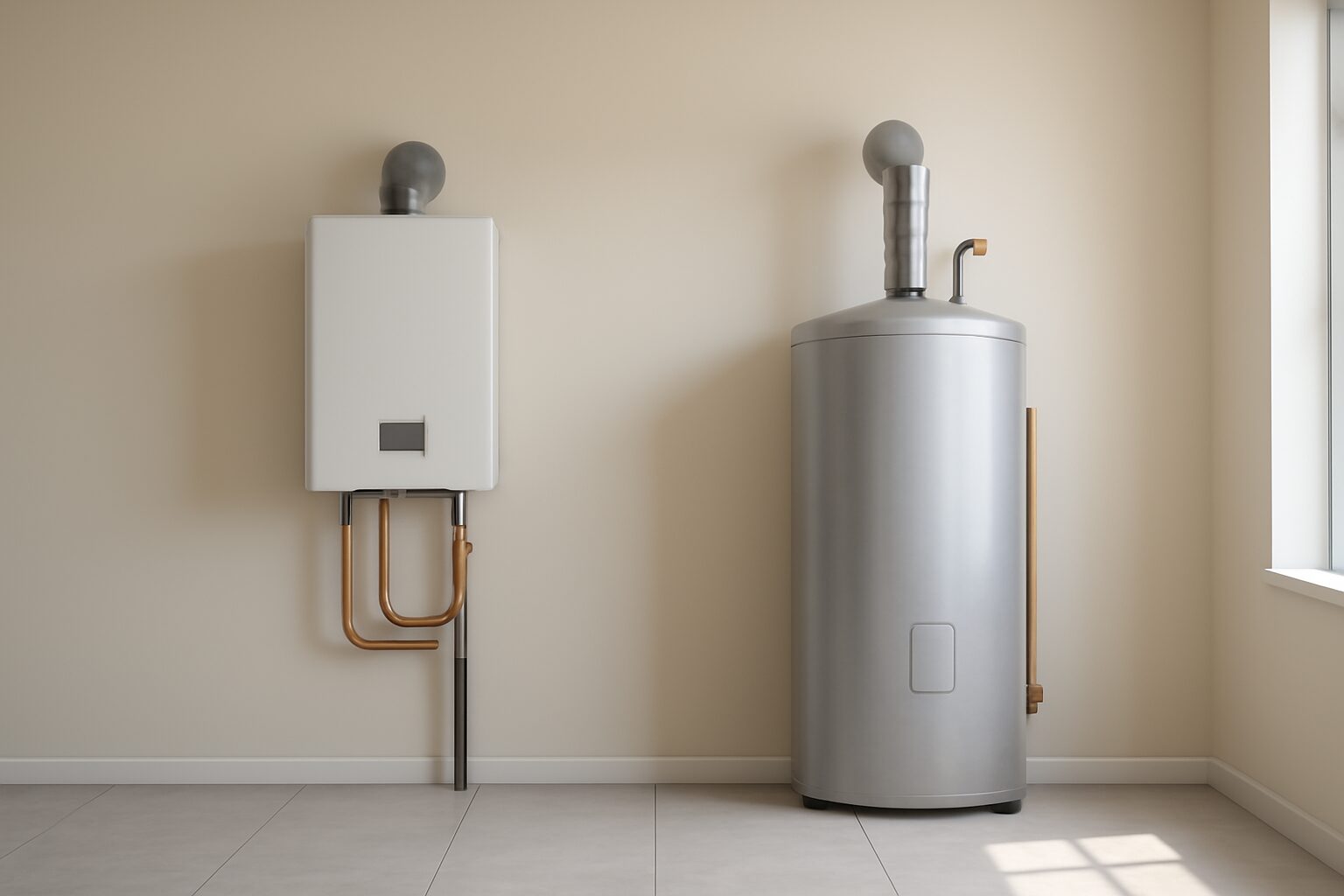
Tankless water heaters work differently than traditional tank models. Instead of storing hot water in a big tank, they heat water only when you need it. This means you get better energy efficiency and use less energy overall. Since they don’t keep water hot all the time, these energy-efficient appliances can save you money right away.
They also help the environment. Using less fuel or electricity lowers your home’s carbon footprint. Plus, many tankless models last longer because they have fewer parts that wear out or rust compared to tanks.
But there are some downsides too. Tankless systems usually cost more upfront than traditional heaters. They need to be sized right; if the unit is too small, it might not keep up when many people use hot water at once.
Choosing between tankless vs traditional water heaters depends on your family’s hot water needs and budget.
A big selling point for tankless water heaters is hot water on demand. When you turn on a faucet or shower, cold water runs through the unit’s heating element or gas burner and heats quickly.
This means no waiting for a big tank to refill with hot water after you use it. With tanks, you can run out of hot water mid-shower sometimes. Tankless units provide a steady stream as long as the flow stays under what the system can handle.
Demand water heater tech wastes less energy since it doesn’t keep warm water sitting around when not needed.
Tankless units have a small size that saves space in your home. They usually mount on walls, so they don’t take up floor space like bulky storage tanks do.
This design fits nicely in closets, under sinks, or other tight places where a traditional heater wouldn’t fit well—perfect for small homes or apartments that want to save room but still get good heating.
Installing a tankless system can be more complicated than swapping out a regular heater. Here’s why:
All these things add to cost but make sure your heater works safely and lasts longer.
When deciding between tankless vs traditional models, think about how much hot water you use daily, space in your home, and how much you want to spend on installation versus energy bills.
Hybrid water heaters mix the best parts of tankless and regular systems. They work great for many homes in San Diego. You might also hear them called heat pump water heaters. These use heat pump technology to move warmth from the air into the water. This takes way less energy than electric or gas models.
Unlike a tankless water heater that heats water as you need it, hybrids store hot water in a tank. But they do this with much better home appliance efficiency. That means you get big energy savings and still have hot water ready when you want it. Going with a hybrid is an eco-friendly approach that cuts your home’s environmental impact without losing comfort.
Because hybrids move heat instead of making it from scratch, they can cut energy consumption by up to 60% compared to old electric tanks (U.S. Department of Energy). So, if you want both good performance and to be green, hybrids offer a solid middle ground between upfront cost and long-term savings.
Upfront vs. Long-Term Costs
Choosing between tankless, traditional, or hybrid means knowing the full cost picture. Tankless usually costs more at first because of fancy tech and tricky installs. Traditional tanks cost less up front but might need replacing sooner.
Hybrid water heaters fall right in the middle price-wise. They last longer thanks to tough parts and efficient running. Plus, many utilities give rebates on energy-efficient appliances like hybrids. That makes them cheaper over time.
Thinking about both upfront costs and future savings helps you pick what fits your budget and offers good value.
Energy Savings Potential
Energy efficiency helps lower your monthly bills and shrinks your impact on the planet. Hybrid models save energy fast because they work better than regular electric tanks or some old gas ones.
They use heat pump technology instead of just heating elements or burners. So they use less electricity for every gallon heated. That means less total energy used but still enough hot water for your needs.
If you want to spend less on utilities while being green, choosing a hybrid can show quick cuts in yearly running costs.
Meeting Hot Water Demand
Every family uses hot water differently. That affects which system fits best.
Tankless heaters are great for endless hot water when you want it but might struggle if lots of taps run at once during busy times.
Traditional tanks hold big amounts ready to go but can run dry if demand gets too high before heating catches up again.
Hybrids balance how much they store with smart reheating cycles that suit normal family needs seen in San Diego homes.
Knowing how much hot water you use each day helps pick a system that handles your household’s demand well without wasting power or causing trouble.
Picking the right home heating system comes down to balancing costs with how well it works—like saving energy and meeting daily needs comfortably. Hybrid water heaters sit right in the middle, giving benefits from both sides. They’re good for people wanting smart choices that also care about being eco-friendly around San Diego.
Installing a water heater isn’t just about putting it in place. You need to follow local water heater codes and get the right permits first. A plumbing inspection checks how your current system is doing before anything new goes in.
Water heater installation cost factors depend on many things, like the kind of unit you pick. Sometimes you need plumbing upgrades or electrical work. Upgraded gas lines or extra venting might be needed too. For example, tankless water heaters often require special venting or stronger gas lines than regular tanks.
Professional plumbing installation services take care of all this. They get the permits, do inspections, fix your old setup if needed, and install everything safely by the rules.
When choosing between tankless and traditional water heaters, cost matters. Traditional units usually cost less at first but use more energy over time because they keep water hot all the time.
Tankless models cost more upfront but save energy right away by heating water only when you need it. They often last longer and cut down your utility bills. Plus, some places offer rebates for energy-saving tankless systems, which can make them cheaper in the long run.
It’s smart to think about the upfront price against future savings on energy and repairs when you invest in a water heater.
Keeping your water heater in good shape helps it last longer no matter what type you have. Regular flushing gets rid of sediment buildup that makes it work worse and stops mineral build-up inside pipes or tanks.
Black Mountain Plumbing offers full water heating maintenance, including regular checks and emergency repairs when things go wrong. They help stop common problems with scheduled upkeep like flushing cycles made for both tankless and traditional heaters.
If sudden issues happen—like leaks or no hot water—they provide quick emergency repair to keep things running with less hassle at home.
Good care along with expert installation keeps your water heater safe and working well for many years.
Picking the right water heater depends on your home’s size, hot water needs, and budget. Tankless water heaters heat water only when you need it. They don’t store water, so they save space and energy. Traditional water heaters keep a tank of hot water ready but use more energy to keep it warm.
Think about installation cost, how long it lasts, and how much upkeep it needs. Also, consider how much energy each type uses. After you pick tankless vs traditional, get a plumbing inspection. A pro will check your setup and make sure the new heater fits your home.
Then, ask for quotes from trusted plumbers. They should explain warranty details and service options clearly so you know what you’re paying for.
Choosing between tankless or traditional water heaters means brand matters a lot. Some brands are known for being reliable and lasting a long time. Their warranties protect your investment.
Here are some popular brands people trust:
Look for ENERGY STAR® certified products. These meet quality and efficiency standards. Warranties usually cover parts for 6 to 12 years. Tankless models often have longer warranties because of their tech.
Buying from well-known brands lowers repair chances and keeps hot water flowing all year.
| Feature | Tankless Water Heaters | Storage Tank Water Heaters |
|---|---|---|
| Hot Water Supply | Unlimited; heats on demand | Limited by tank size |
| Energy Efficiency | Up to 30% more efficient | Loses energy keeping water warm |
| Lifespan | About 20 years or more | Around 10–15 years |
| Installation Cost | Costs more upfront | Cheaper to install |
| Space Requirement | Small; mounts on wall | Takes up more space |
| Home Energy Costs | Usually lower monthly bills | Can raise utility costs |
Tankless heaters only heat when you need hot water. Traditional tanks keep big amounts warm all the time—even when not used—which wastes energy.
For San Diego homes wanting to save on bills and enjoy endless hot showers, tankless can be better despite higher start-up cost. But if money is tight or use is low, a solid traditional heater still works well.
Thinking about upgrading your water heater? Black Mountain Plumbing offers expert plumbing services in San Diego. Our team does full plumbing inspections before suggesting solutions—whether installing an energy-saving tankless unit or swapping out an old storage tank system.
We provide pressure-free estimates so you can see your options without feeling pushed. Our skilled techs handle installations with care and quality work that lasts.
Call us today to schedule your free on-site estimate! Get advice that fits your home’s needs while helping you save money with smart water heating choices.
What are the main tank water heater drawbacks?
Standby heat loss and capacity limitations lead to energy waste and running out of hot water with traditional tanks.
How does water heater capacity affect home comfort?
Capacity limits mean tanks can run out during high demand. Tankless heaters provide a continuous stream but must be properly sized.
Why is home appliance efficiency important in choosing a water heater?
Higher efficiency means lower energy consumption and utility bills, which saves money over time.
What plumbing upgrades might be needed for a tankless water heater?
Upgraded gas lines, additional venting, and sometimes electrical work ensure safe and efficient operation.
How do energy regulation standards for water heaters impact my choice?
Compliance ensures your unit meets minimum efficiency and safety rules, reducing energy waste.
What maintenance requirements help extend water heater lifespan?
Regular flushing to prevent sediment buildup and checking anode rods guard against corrosion and scale buildup.
Can I get rebates for installing a hybrid or tankless water heater?
Yes, many utilities offer water heater rebates to encourage eco-friendly upgrades.
How does heat pump technology improve hybrid water heaters?
It uses ambient air heat to warm water, cutting energy use up to 60% compared to electric tanks.
What are the benefits of a backup electrical system with tankless heaters?
It ensures operability during power outages, providing hot water when you need it most.