24 Hour Service - 7 Days a Week


Water quality matters a lot to people living in San Diego. The water that comes into your home can be affected by many things. Both municipal water and private wells have their own risks. Pollution from the environment and contamination in the groundwater cause problems for the water supply here.
Many types of contaminants can be found in San Diego homes’ water. Here are some common ones:
Bad water quality costs more than you think. It’s not just about the taste or smell; it can hit your wallet hard.
Knowing these things helps people check their tap water better. Then they can pick filters or other fixes to keep their drinking water safe at home.
Knowing where water contaminants come from helps you keep your drinking water safe. Pollutants can sneak into your water through nature, factories, or old pipes at home. Spotting these problems early protects your health and points you toward the right fixes.
Water contamination sources include farm runoff, sewage leaks, rusty pipes, and pollution in the environment. These bring different kinds of waterborne pollutants into your tap water. Drinking water contaminants usually fit into three groups: biological, chemical, and physical.
Biological contaminants are tiny living things like bacteria (such as E.coli), viruses, protozoa, and parasites. They cause illnesses like stomach bugs. These germs often come from sewage spills or animal waste that gets into the water.
Chemical contaminants cover things like volatile organic chemicals (VOCs), heavy metals such as lead or arsenic, pesticides used on crops, nitrates from fertilizers, and other man-made chemicals. For instance:
Sometimes chemical pollution gives water a weird chemical taste or smell.
Physical contaminants are bits like dirt or rust flakes from corroded pipes. They make water cloudy or discolored but usually don’t hurt you unless germs grow with them.
You can catch problems with your tap water by watching for certain signs:
If you see these signs a lot at home—especially around San Diego—it’s smart to get your water tested by a pro for exact results.
Knowing how germs differ from chemical toxins—and spotting usual warning signs—helps you control your home’s clean water needs. Testing tap water often finds specific problems so you pick filters that remove the bad stuff right. Clean drinking water keeps your family healthy every day.
Bad water quality hurts both our health and the environment. When water gets dirty, it can cause waterborne diseases that bring serious health problems. These problems affect not only individuals but whole communities too. Knowing how water quality affects us helps protect your family’s health and keeps the planet safer.
Water contaminants fall into two big groups: biological and chemical. Biological ones include bacteria like E. coli and parasites such as giardia. These tiny invaders cause stomach troubles, from mild nausea to severe diarrhea or dehydration. Kids, older people, and those with weak immune systems get hit the hardest.
Chemical contaminants often come from factories or old pipes. Heavy metals, like lead, are very dangerous—even small amounts can cause brain problems and slow down kids’ growth. Chemicals made during water cleaning, like chlorine byproducts, might raise the risk of cancer if you drink them a lot.
Here are some common harmful things in tap water:
Testing your tap water often helps spot these dangers early. Then you can pick filters that keep your drinking water safe at home.
Poor water quality does more than harm health—it pollutes the environment too. Many people turn to bottled water when their tap isn’t safe. This choice creates lots of plastic bottle waste that damages nature everywhere.
Plastic pollution fills landfills and oceans. It hurts sea creatures who swallow or get trapped in plastic bits. Also, making single-use plastics uses tons of energy, which adds to climate change.
Poor tap water causes these daily annoyances too:
Using cleaner water fixes these problems and helps homes stay healthier while caring for nature around us.
Watching out for what’s in your water means knowing how it affects health and nature alike. Testing regularly with the right treatment keeps families safe from sickness and cuts down damage to the environment—a smart step for any home in San Diego today.
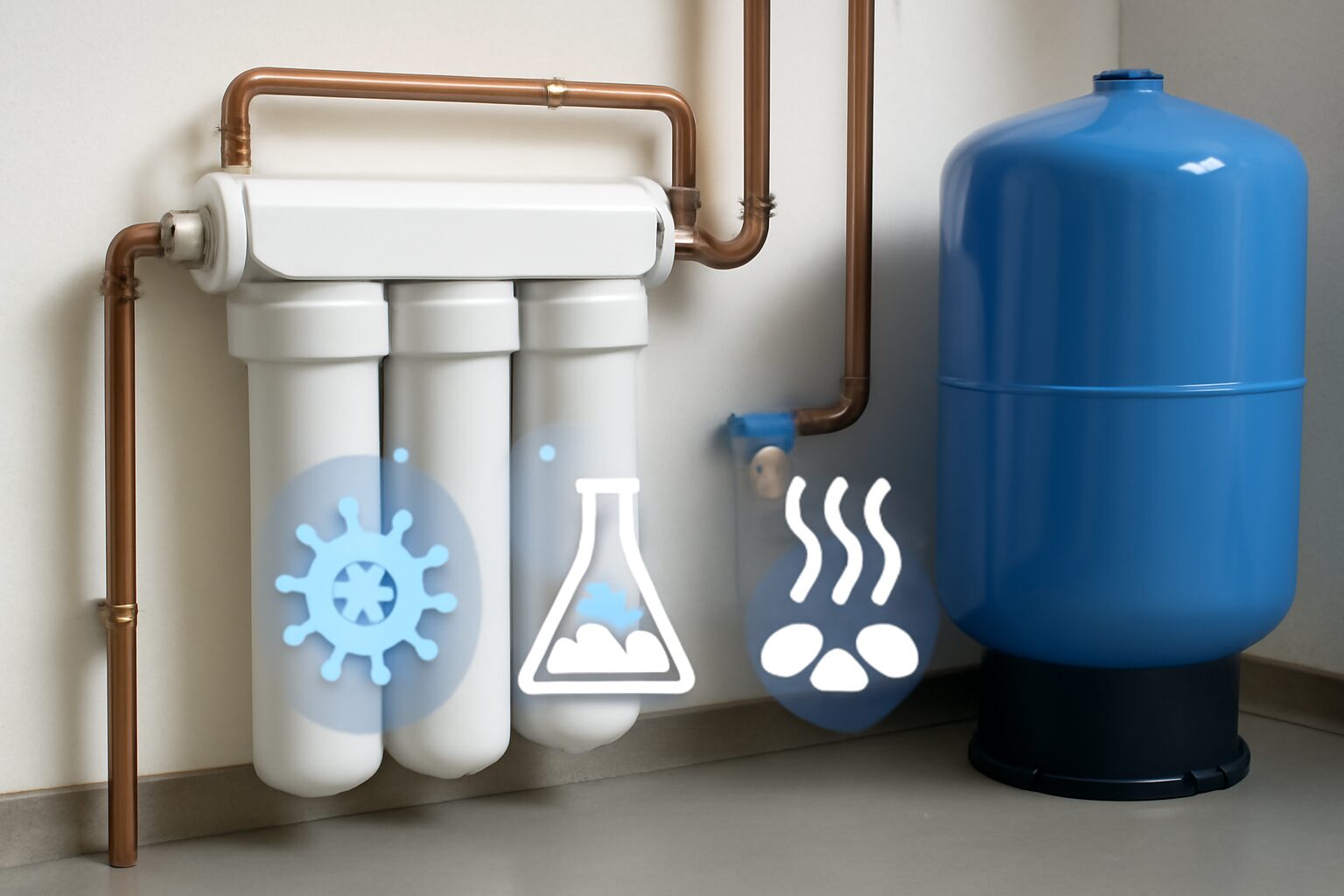
Getting clean water at home starts with picking the right water filtration systems and treatment options. San Diego homes often have issues with chlorine, sediment, and heavy metals in their water. Good water treatment can give you safe water all over your house without breaking the bank.
Whole house water filtration systems protect every faucet by cleaning all the water that comes in. These setups mix different ways to catch many kinds of bad stuff, so your water tastes better and is safer. If you just want to fix one spot, point-of-use filters work well for places like the kitchen sink or fridge.
Finding clean water solutions that cost less but still work well means thinking about both price and how well they clean. Many people use sediment filters with activated carbon filters to get rid of dirt and chemicals without spending too much. Keeping up with maintenance helps these systems last longer and work better.
Picking the right domestic water treatment depends on what’s in your water and how you use it. Here’s a quick look at common choices:
| Treatment Type | How It Works | Best For | Pros | Cons |
|---|---|---|---|---|
| Water Softeners | Swap hardness minerals like calcium for sodium or potassium ions | Hard water problems | Stops scale buildup; protects appliances | Doesn’t remove chemical pollutants |
| Reverse Osmosis Filtration | Pushes water through a membrane to block dissolved solids | Drinking and cooking taps | Removes up to 99% of contaminants like lead and arsenic | Costs more; wastes some water |
| Activated Carbon Filters | Adsorbs chlorine, pesticides, and VOCs | Improves taste and smell | Makes water taste better; cuts chemicals | Filters wear out quickly; doesn’t remove minerals |
| Sediment Filtration | Catches particles like sand or rust | Protects plumbing and devices | Cheap; helps other filters last longer | Does not clean dissolved substances |
| Point-of-Use Water Filters | e.g., under-sink |
These options can be mixed in one system that fits your home’s needs for solid domestic treatment.
Finding the best home water filter starts with an expert checking what’s in your tap water. Tests show what harmful stuff is there so you get solutions made just for your family.
Good contaminant removal takes care of bacteria, lead, bad tastes or smells from chlorine, nitrates, and sediments often found in San Diego homes. You might want whole house systems that clean all pipes plus point-of-use units for drinking spots.
When you pick a system, think about:
Having a pro check your water helps you buy equipment that works well long term without spending too much.
Cleanwater matters—using the right mix of filtration tech keeps your household’s drinking water safer while staying easy on your wallet across San Diego homes.
Sources:
Keeping your home’s water clean takes regular care. You need to watch your water system closely. Plumbing maintenance and checking water quality help stop contamination. Taking action early protects your family’s health. It also helps save water in your neighborhood.
Water can get dirty in many ways. Old pipes can corrode and leak lead into the water. Replacing lead pipes is a must for safe drinking water.
Other sources of contamination are soil runoff, old plumbing, and mixed pipes carrying dirty water into clean lines. To prevent this, follow simple household water safety steps:
You can stop corrosion by using special coatings or swapping old pipes with copper or PVC. Look at your pipes often to catch problems early.
Doing these things keeps your water clean. It also meets safety rules like those from the EPA.
Filters remove bad stuff from your tap water. Change filters as the instructions say. Old filters get clogged and don’t work right.
You can test your water at home with easy kits. These check for chlorine, pH, hardness, bacteria, or metals like lead. The kits give quick answers but may miss some problems.
Experts can do deeper tests in labs if you think something’s wrong. They tell you what to fix based on what they find.
Keeping up with maintenance stops big repairs later. It also means safe drinking water every day.
By watching out for corrosion and testing regularly, you keep bad contaminants away from your family’s tap water. For help with your home’s water quality, talk to local pros who know the rules and conditions near you.
Clean water in your home matters. In San Diego, water quality can change because of different sources and the environment. Sometimes, tap water has stuff that shouldn’t be there. You need an expert water assessment to find those problems fast. Black Mountain Plumbing offers professional consultation made just for your home’s needs. Plus, our team cares about community involvement and water quality advocacy. We work to help people learn and get better water.
We start by testing your water supply for things like lead, chlorine, bacteria, or dirt. Our water filtration solutions remove these contaminants well. Each plan we make fits your test results and what your home needs.
Here’s what we offer:
Checking your tap water often can keep your family safe from hidden pollution. We give out free at-home water test kits so you can collect samples easily at home. These kits catch common problems fast. That way, you know if you should fix something soon.
Our home water testing kits offer:
Call us today for free tap water testing. Get the facts about San Diego’s local water and keep your family healthy.
What is the importance of water quality testing for home water supply?
Water quality testing detects harmful contaminants in your water. It helps ensure safe drinking water and meets water safety standards. Regular testing prevents health risks.
How do drinking water regulations protect families in San Diego?
Drinking water regulations set limits on contaminant levels. They require monitoring to keep municipal and private well water safe. Compliance reduces waterborne illnesses.
What are effective water purification methods for home use?
Common methods include reverse osmosis filtration, activated carbon filters, and sediment filtration. These remove biological contaminants, chemicals, and sediments efficiently.
How does hard water affect plumbing and appliances?
Hard water causes mineral buildup and scaling. It leads to corrosion, reduces appliance lifespan, and raises water bills due to inefficiency. Treatment prevents damage.
What are the benefits of point-of-use water filters compared to whole house systems?
Point-of-use filters clean specific taps like kitchen sinks. Whole house systems treat all incoming water. Both improve taste and remove pollutants but serve different needs.
How can homeowners prevent corrosion in their plumbing systems?
Use corrosion prevention measures such as pipe replacement, coatings, and maintaining proper pH balance. Regular inspection stops leaks and protects against lead contamination.
Why is it important to monitor fluoride levels in drinking water?
Fluoride helps dental health but excess fluoride causes issues. Monitoring ensures fluoride stays within potable water standards for health protection.
What impact does bottled water consumption have on the environment?
Bottled water creates plastic waste that pollutes landfills and oceans. It also increases energy use contributing to climate change.
How do community water initiatives improve local water quality?
They promote sustainable usage, public education, and infrastructure upgrades. These programs reduce pollution and support potable water standards.
What role does a professional consultation play in improving home water quality?
Experts conduct thorough testing at a certified lab to detect contaminants like PFAS or trichloroethylene (TCE). They recommend tailored solutions for lasting results.